

Outlook
Part of Technical SEO audits: scope and planning
Technical SEO AI applications, automatic wins or audit debt?
A practical look at technical SEO AI applications, covering what England teams can safely automate now and when to schedule a human audit instead.
What to take away
- AI triage is quick. A model pass over a 50,000 URL crawl groups thin and near-duplicate pages in under 30 minutes, where the same read by hand typically takes two to three days.
- AI is strongest at triageclustering near-duplicate titles, spotting orphan pages and ranking which template issues affect the most URLS first.
- Screaming Frog SEO Spider runs the crawl, Sitebulb ranks the issues and a model API such as OpenAI's groups the export for review.
- IAB UK's search creative principles apply to how you present automated output, not just to ad copy, so keep a human sign off on anything published.
- Under the UK GDPR, an AI tool that processes personal data in query strings or form submissions creates obligations you must document before go live.
Where AI helps a technical audit, and when to automate a fix
Triage is the clearest win. A crawl of a mid sized English ecommerce site can return tens of thousands of URLS, and no team has time to read them all. An AI layer that groups pages by template, similarity and internal link depth turns that into a short list.
AI Triage Workflow
- Crawl returns tens of thousands of URLs
- AI groups by template, similarity, link depth
- Output: short prioritized list
Log file analysis is the second area. Models can summarise which bots hit which directories and surface patterns a spreadsheet hides. The output still needs checking against server configuration before you act on it.
Internal linking is the third. AI can suggest link paths from strong pages to weak ones, but a human should confirm the anchor text reads naturally. Poorly chosen anchors create the exact over optimisation problem you were trying to fix.
For a wider view of how these changes interact with planning cycles, the technical SEO trends and outlook for England in 2027 article sets out the update triggers worth tracking.
Detection is reliable. Automated fixes are safe only under narrow rules. Changing a canonical tag, redirecting a URL or removing a page from the index is reversible in theory but costly in practice if done at scale by mistake.
The classic failure is a canonical or robots rule pushed to every URL in a template. The damage usually shows in crawl stats days later, not in the tool that proposed it.
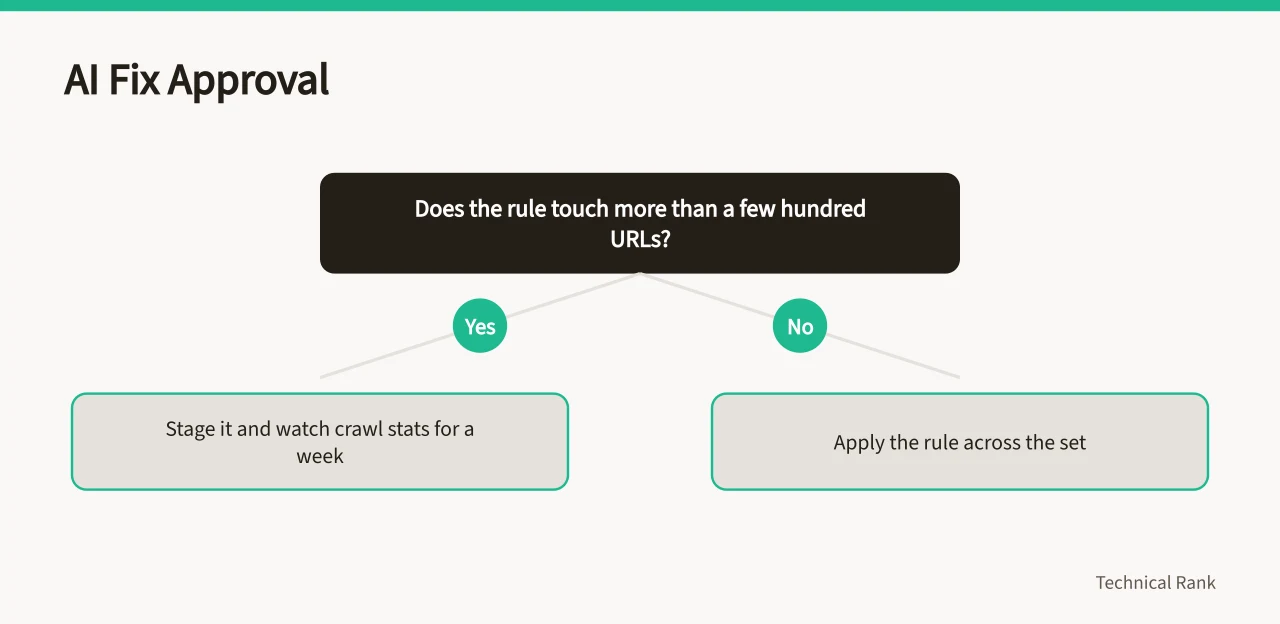
A sensible pattern is to let AI propose changes, have a person approve a sample, then apply the rule across the set. Keep a rollback list. If the rule touches more than a few hundred URLS, stage it and watch crawl stats for a week before expanding.
- Proposecrawl the site with Screaming Frog SEO Spider, export the flagged URLs and pass the clusters to a model API for labelling.
- Samplecheck about 20 URLs per cluster by hand against the live page and the server response.
- Approvesign off clusters that pass the sample, and send the rest back with a reason.
- Applytest the change in staging, then roll it out in batches of a few hundred URLs.
- Roll backhold the original values in the rollback list, and watch crawl stats and logs for a week before widening the rule.
Search marketing standards also matter here. The IAB UK search creative principles set expectations for how search output should be presented, and automated page changes that affect what users see fall inside that scope.
What data protection rules apply to AI in SEO tooling?
Any tool that ingests query strings, form fields or user IDs is processing personal data. Under the UK GDPR, individuals have rights of access, erasure and objection, and your tooling must be able to honour them.
The ICO's guidance on individual rights explains what those rights cover. In practice, that means knowing where AI tool logs are stored, how long they are kept and who can retrieve them.
The ICO's AI and data protection risk toolkit sets out the questions to work through before deployment. Article 22 of the UK GDPR also restricts decisions made solely by automated means where they have a legal or similarly significant effect.
Set a retention period for raw crawl and log data before you start, not after. Anonymise IP addresses where the analysis does not need them. Document the lawful basis for any processing that goes beyond aggregate site performance.
Does competition law affect how AI tools are used?
Sometimes. If AI assisted analysis feeds into pricing, ranking or marketplace behaviour, the Competition and Markets Authority's remit on online competition and consumer protection applies. The Digital Markets, Competition and Consumers Act 2024 added powers to designate firms with strategic market status and to impose conduct requirements on them.
Most technical SEO work sits outside this. A marketplace team that uses AI to reprice listings or reorder search results is inside it, and should record who approved each automated rule and what evidence supported it.
For teams building a case internally, the technical SEO market outlook data and sources page shows which figures are defensible and which are not.
Glossary
- Triageranking issues by likely impact so the biggest come first.
- Bulk noindexremoving many URLS from search results at once.
- Rollback listthe record of changes you can reverse if something breaks.
- Retention periodhow long data is kept before deletion.
Common questions
Can AI replace a technical SEO audit?
No. It reads a crawl export, not your server. Redirect chains, blocked resources, JavaScript rendering faults and log retention settings still need checking against the live configuration.
How often should AI findings be reviewed?
At least monthly for active sites, and always before a bulk change. For example, a team paying £400 a month for crawl tooling should still budget review time, because the tool does not carry the risk.
What should be documented before adopting an AI SEO tool?
Record what data it ingests, where that data is stored, the retention period and who approves changes. That record is what you would show a regulator or an internal risk team.